Mattarella Reinforces Judicial Independence and Warns Young Judges
At the Quirinale, Mattarella defended magistrates' autonomy, urged impartiality and prudence on social media, and cited recent tensions between politics and justice.
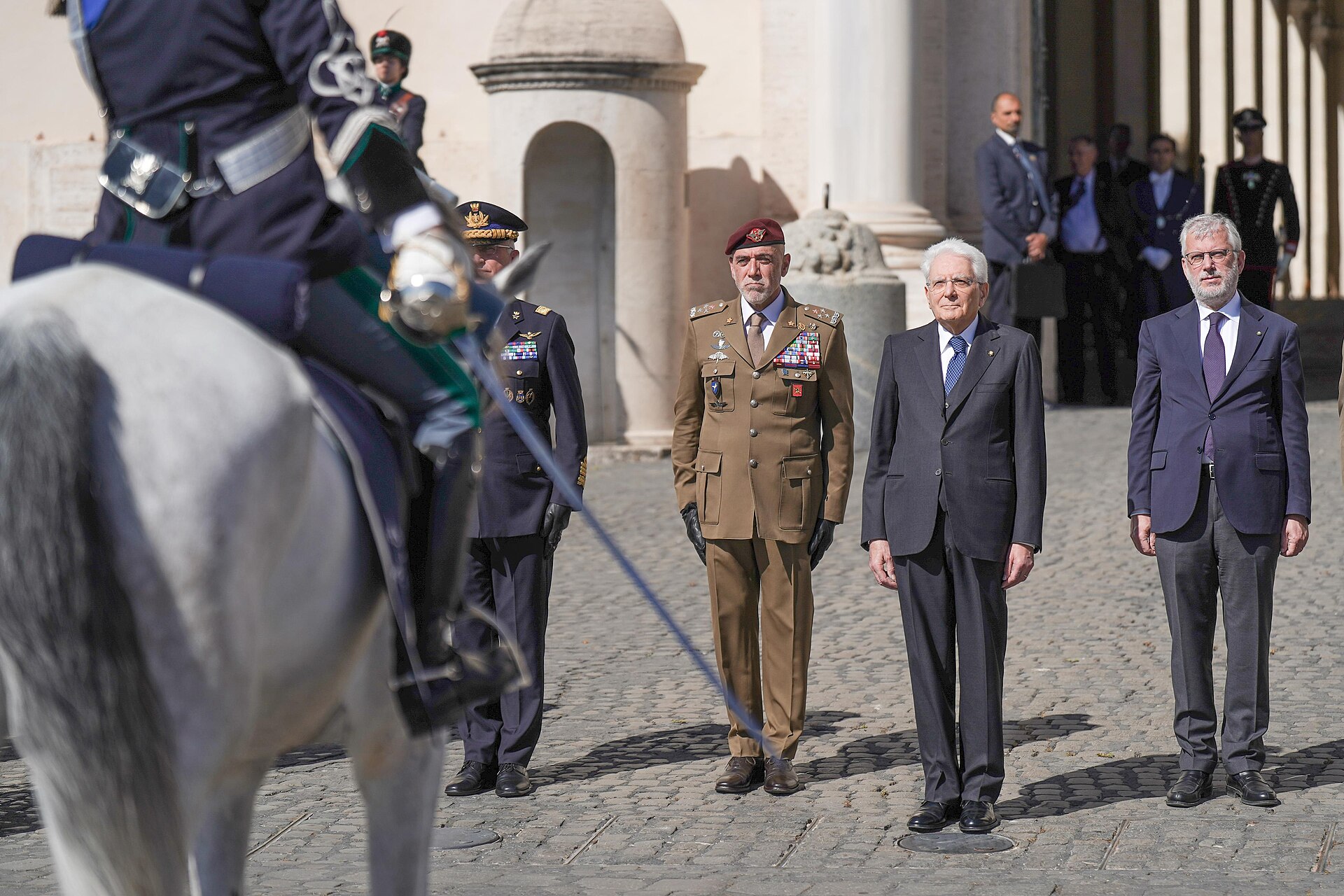
The president Sergio Mattarella welcomed at the Quirinale ordinary magistrates in training contracted in 2025 and reaffirmed the autonomy and independence of the judiciary, asking the young judges for impartiality, sobriety, and caution in the use of social networks, in a speech that also referenced the recent climate of tension between politics and Justice. According to ANSA, the speech took place in the Salone dei Corazzieri at the Quirinale on November 10, 2026.
Meta description: At the Quirinale, Mattarella defended magistrates' autonomy, urged impartiality, sobriety and care with social networks, and cited recent politics-justice tensions.
Speech at the Quirinale
Mattarella addressed the magistrates who joined as trainees in 2025, reminding that the Constitution of Italy recognizes guarantees of autonomy and independence for members of the judiciary. In his speech, the president highlighted that judges “do not have hierarchical subordination” — an expression cited by ANSA — to emphasize that the role of the judge should not be subject to relations of hierarchical obedience.
The president spoke in the Salone dei Corazzieri, at the Quirinale, in an official ceremony for those newly hired in 2025. According to ANSA, Mattarella stressed the institutional value of the judiciary in the balance of powers and the importance of preserving public trust in the judicial system.

“Le toghe non devono avere soggezione di tipo gerarchico,” Mattarella stated, according to ANSA.
Warnings to young magistrates and political context
Mattarella issued several practical recommendations to young magistrates: maintain impartiality, practice sobriety in public conduct, and preserve discretion in the exercise of their functions. The president advised that personal and professional conduct of magistrates should always contribute to the credibility of the judiciary.
Part of the speech focused on the use of social networks. Mattarella urged attention and caution to avoid "inopportune comments" that could compromise the public perception of the judiciary — a point covered by ANSA. The warning accompanies broader debate about how digital visibility can influence the image of institutions and the role of judges.
The president also framed his appeal within a political landscape marked by frictions between judicial and political spheres. According to ANSA, Mattarella implicitly referred to the backdrop of tensions that emerged after the referendum on justice and episodes such as Prime Minister Giorgia Meloni’s remarks against the Milan gip, Tiziana Landoni. The mention underscores the need for separation of powers and mutual respect between the judiciary and elected representatives.
Implications for the judiciary and society
The president’s tone pointed to two practical challenges:
- The need to consolidate, from the early years of careers, a professional ethics that strengthens public trust;
- The balance between the transparency required of the administration of justice and the protection of the privacy and impartiality of magistrates, especially in the digital environment.
Mattarella reiterated that the Constitution assigns guarantees to ensure judicial independence and that these guarantees are essential for democracy. According to ANSA, the president asked magistrates in training to act with a sense of institutional responsibility, avoiding behaviors that could isolate the judiciary from social consensus or expose it to improper influences.
Repercussions and institutional reading
The president’s speech at the Quirinale was received in a context where the topic of the relationship between politics and justice remains sensitive in public and media debate. The warning about social networks echoes initiatives and discussions about codes of conduct and limits on media exposure for legal professionals — topics of interest to readers following news about Italy and institutional issues.
Mattarella’s recommendations are relevant both to those seeking to follow the evolution of Italian institutions and to those researching procedures and norms related to Justice and Italian citizenship. For more information on topics related to public life and citizenship, see our articles in Notícias da Itália, Cidadania Italiana and Vida na Itália.
Conclusion In the Quirinale speech, Mattarella issued a call to institutional responsibility: defend the autonomy of the judiciary, preserve impartiality, and avoid conduct that could compromise the credibility of the justice system, with particular attention to the impact of social networks at a time of tension between politics and Justice. According to ANSA, the president reaffirmed that these principles are fundamental to the balanced functioning of Italian democracy.
Source: ANSA