
Mars was rich in water; increases the likelihood it hosted life
A study using Perseverance rover data indicates Jezero crater's inner margin was shaped by ancient lakes, groundwater, and hydrothermal fluids, boosting chances of traces.
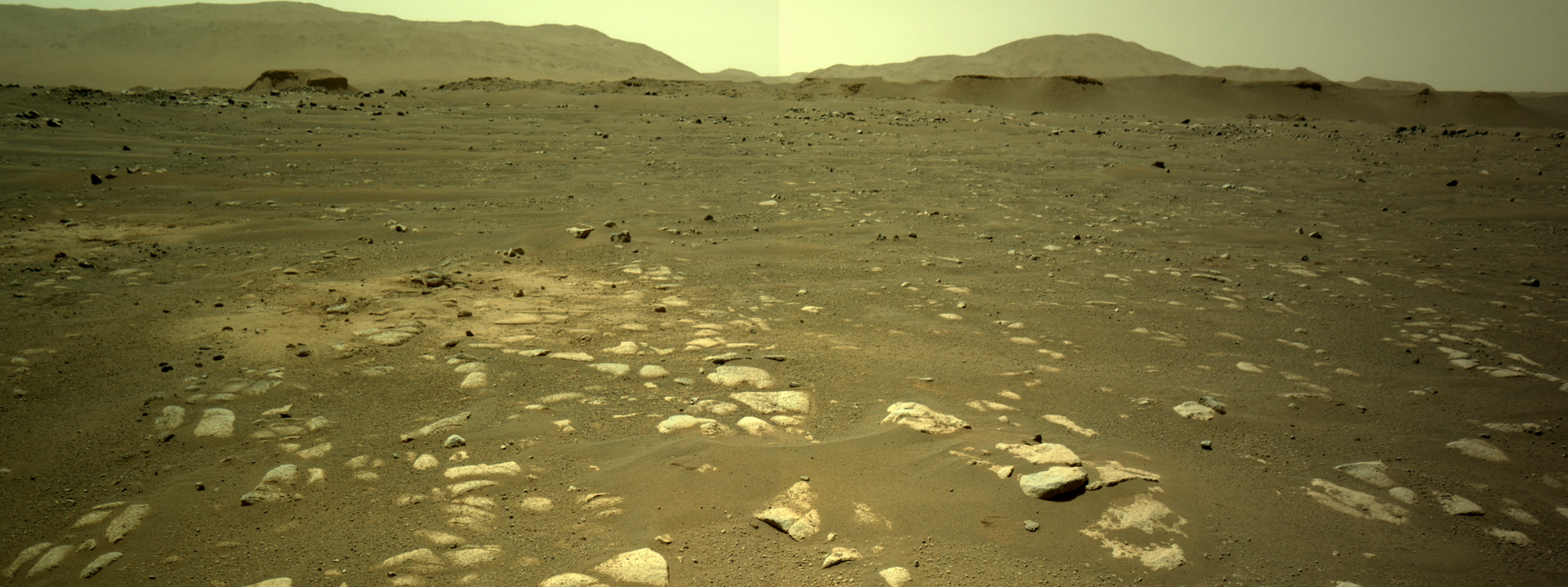
A study led by Purdue University and published in Communications Earth & Environment concludes that the inner margin of Jezero crater on Mars — the so-called Margin Unit — was shaped by a complex system of ancient lakes, groundwater, and hydrothermal fluids, increasing the probability that the planet once hosted life, according to ANSA.
Summary of the study: Jezero, water, and hydrothermalism
The research analyzed geological data and images gathered by NASA's rover Perseverance in the Jezero basin. According to ANSA, the authors interpret the crater’s annular features as the result not only of a surface lake but also of groundwater processes and hydrothermal activity, which would have operated in concert to deposit sediments and alter the local chemistry.
- The presence of layered features and deposits associated with evaporites and hydrothermal precipitates is cited as evidence of prolonged aquatic environments.
- The authors emphasize that hydrothermal systems create conditions favorable for organic synthesis and preservation of biosignatures, because they can provide heat, catalytic minerals, and zones of fluid circulation.
The combination of persistent lakes and hydrothermal conditions makes Jezero’s inner margin a particularly promising target for the search for signs of ancient life.
Implications for the search for life: why water matters
The finding reinforces the idea that Mars had habitable environments on local and temporal scales sufficient to permit chemical processes associated with life. According to experts cited by ANSA, when there is liquid water, especially in contact with hydrothermal sources, the chances of formation and preservation of biological traces (biosignatures) increase.

However, the report notes that definitive identification of signs of life depends on detailed laboratory analyses that can only be performed with samples brought back to Earth. The instruments aboard Perseverance are powerful but have limitations in conclusively distinguishing between biological signals and complex abiotic processes.
Perseverance, Jezero, and the Mars Sample Return impasse
The study gains relevance in the context of sampling missions: the rover has already collected cores aimed at the Mars Sample Return (MSR) program, a collaboration between NASA and ESA designed to bring Martian material for terrestrial analysis. According to ANSA, however, the MSR program faces a moment of stasis, with delays and technical and political obstacles.
The report notes that Europe and the United States are operating at different paces and that, in the context of international competition for Mars exploration, China has been granted what observers perceive as a green light, a relative advancement on the scientific leadership board. These factors make the date on which samples collected by Perseverance will be analyzed in terrestrial laboratories uncertain — a prerequisite for confirming any hint of ancient life at Jezero.
International context and relevance for Brazilian readers
The competition and cooperation among agencies — NASA, ESA, and Chinese programs — illustrate how high-impact scientific discoveries depend on resources, political decisions, and international partnerships. For Brazilian readers and descendants of Italians interested in science, technology, and international politics, the case shows that strategic advances in space exploration hinge on both scientific merit and the logistical and diplomatic capacity of the involved nations.
- The development of missions and their timelines can affect when and how results are publicly released.
- The story also provides context for following how Italy and European institutions participate in large-scale projects, a topic that combines scientific interest with developments in international policy — issues regularly covered in our Italy News section and aligned with topics on Life in Italy and scientific cooperation.
What to expect next
- New analyses of Perseverance data may identify priority targets for future sampling or reinterpret preservation conditions of biosignatures.
- The evolution of the Mars Sample Return program will be decisive: without return of samples, definitive confirmation of biogenic material in Jezero remains unlikely.
- The international race for access and leadership in Mars science may accelerate or delay concrete actions in the coming years.
Conclusion The study published in Communications Earth & Environment and reported by ANSA raises the likelihood that Jezero hosted aquatic environments favorable to life, but confirms that definitive proof will only come with the return and analysis of samples on Earth. In the meantime, mission progress and international negotiations continue to shape when that answer may be obtained.
Source: ANSA