
Why Italians Emigrated: Hunger, Wars, and Unification
Discover the historical reasons for Italian emigration: hunger, wars, poverty, and the impact of unification. The journey that changed Brazil.
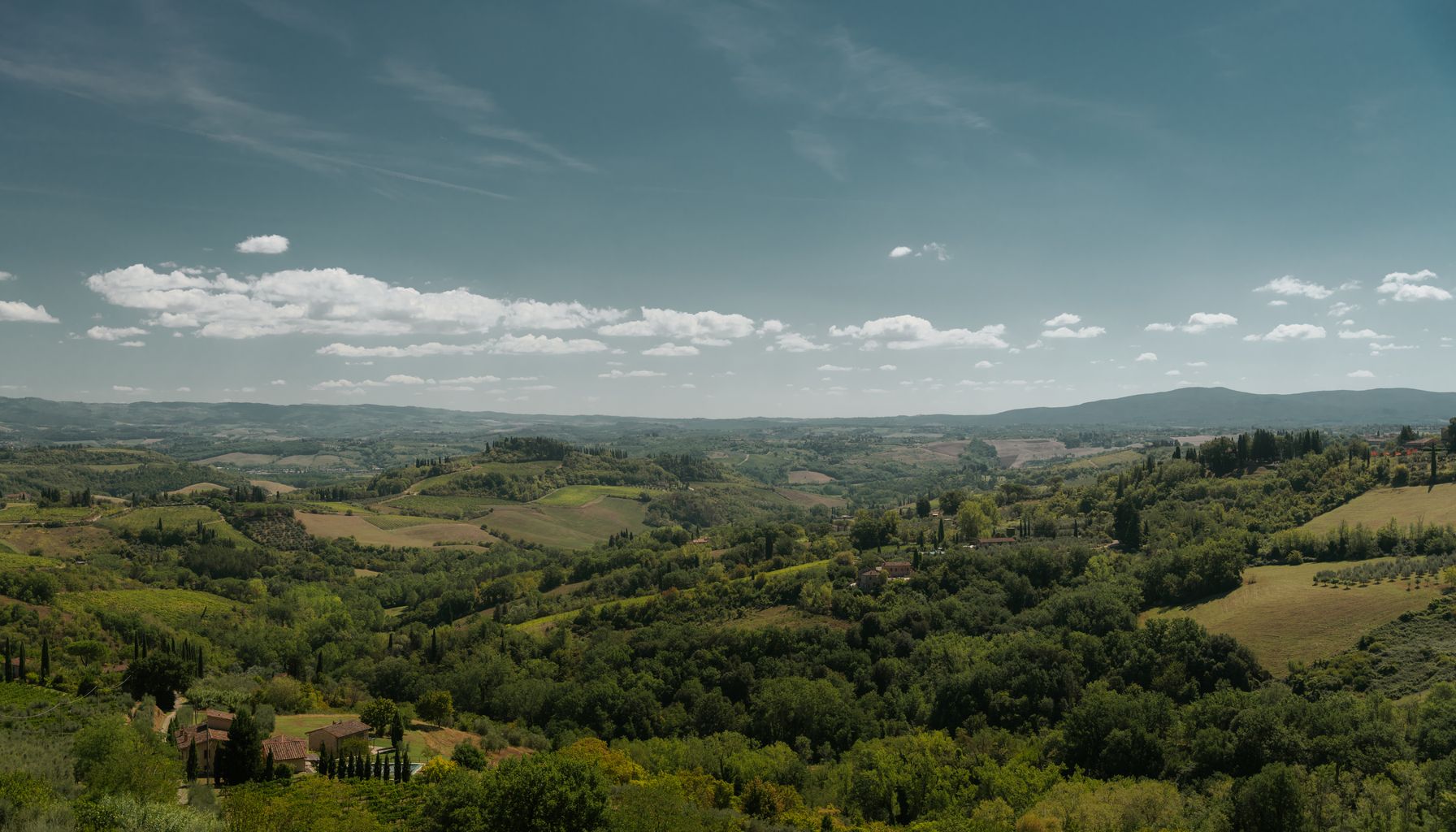
Between 1876 and 1920, approximately four million Italians left their homeland for the Americas, with Brazil becoming one of the primary destinations of what became one of the largest diasporas in modern history. Understanding why Italians emigrated requires looking at a country that, even freshly unified, carried centuries of inequality, hunger, and political instability — factors that combined to expel millions of people from their regions of origin.
A Fragmented Italy Before Unification
Before 1861, Italy as a unified state simply did not exist. The territory was divided into a political patchwork: the Papal States controlled the center of the peninsula, the Kingdom of the Two Sicilies dominated the south and Sicily, while smaller kingdoms and duchies — such as Piedmont-Sardinia, Lombardy-Veneto (under Austrian rule), and Tuscany — spread across the north.
This fragmentation was more than administrative. Each region had its own laws, currencies, and fiscal systems, which hindered any kind of integrated economic development. The predominant economy was agrarian and still carried remnants of feudal structures, with land concentrated in the hands of a few large landowners and the majority of the population living as landless peasants.
Political instability was constant. Revolts, foreign occupations, and border changes marked much of the nineteenth century, creating an environment of insecurity that deterred investments and perpetuated rural poverty. For the vast majority of the Italian population, there was no real prospect of economic or social advancement.

Hunger and Failed Harvests
One of the most direct drivers of emigration was hunger. Successive crop failures and prolonged droughts decimated entire populations across various regions of the peninsula throughout the nineteenth century. The agricultural production system was largely inefficient, still based on rudimentary techniques that did not keep pace with population growth.
The concentration of land in the hands of a few property owners — the so-called latifundia — meant that most peasants worked under sharecropping or rental arrangements, delivering a substantial portion of their production to the landowners and keeping only the minimum for their own subsistence. When harvests failed, there was no reserve whatsoever to cushion the impact.
The situation was even more critical in southern Italy — regions such as Calabria, Sicily, and Campania lived in conditions of extreme misery, worsened by their distance from centers of power and the near-complete absence of public investment. It was precisely from these southern regions that the majority of immigrants who would arrive in Brazil in the following decades departed.
Unification, Wars, and Forced Recruitment
The Risorgimento — the movement for Italian unification led by figures such as Giuseppe Garibaldi and Camillo di Cavour — is celebrated as a landmark of national building, but its practical process caused mass displacements and economic destruction in various regions. Garibaldi's military campaigns through southern Italy, though resulting in the incorporation of the Kingdom of the Two Sicilies into the new Italian state in 1861, left a trail of instability that added to already existing difficulties.
Before that, the Napoleonic Wars of the early nineteenth century had already left lasting economic consequences, with border reorganization and resource depletion across various Italian regions.
After 1861, the new unified state implemented mandatory military service, and forced recruitment increasingly affected young peasants from the south — many of whom saw emigration as a way to escape both misery and conscription into the Army.
Taxes, Industrialization, and Regional Inequality
Unification brought with it a centralized state that needed to finance itself, and the solution found was the creation of new taxes that struck the poorest populations hard, especially in the south. Levies on basic consumption, such as the grain milling tax, made the already scarce bread of peasant families even more expensive.
Meanwhile, northern Italy began a process of industrialization that deepened regional inequalities. Cities such as Milan and Turin began transforming into industrial hubs, attracting investments and infrastructure that never reached the south. This imbalance — known in Italian historiography as the "questione meridionale" (southern question) — consolidated an economic division between north and south that persists, to some extent, to the present day.
The practical result of this combination of factors was the dismantling of traditional local economies and a substantial increase in rural unemployment, leaving millions of families with no alternative but to seek a better life overseas.
Brazil as Destination: Propaganda and Opportunity
While Italy was expelling its sons, Brazil needed to attract them. After the abolition of slavery in 1888, coffee farmers, especially in São Paulo, faced an urgent need for labor to replace enslaved workers on plantations. The solution found by the Brazilian government and the farmers themselves was to finance propaganda campaigns in Italy, promising fertile lands, paid work, and opportunities for prosperity.
These campaigns, often exaggerated or even deceptive, found fertile ground among peasants desperate for an alternative to misery. Once the first families established themselves in Brazil, networks of migrant chains formed: relatives and fellow countrymen already settled sent letters and resources to bring other family and community members, creating a continuous flow that extended for decades.
The Crossing and Building a New Life
The transatlantic voyage itself was an ordeal. Conditions aboard the ships bringing immigrants were often inhumane, with overcrowding, scarcity of food and drinking water, and disease outbreaks that claimed many before they even reached their destination.
Upon arrival, the promises made in Italy were not always fulfilled. Many immigrants found working conditions analogous to servitude on coffee plantations, with debts imposed by the farmers themselves that kept them trapped in a cycle of exploitation. Nevertheless, over generations, Italian immigrants and their descendants managed to build a better life, contributing fundamentally to the formation of modern Brazil — in agriculture, industry, commerce, and culture.
The history of Italian immigrants in Brazil is therefore marked by both suffering and overcoming, an essential chapter in the formation of the country that received the largest Italian colony outside Italy.
A Legacy That Crosses Generations
Today, it is estimated that millions of Brazilians have Italian ancestry, the direct result of that wave of migration that extended mainly between the late nineteenth and early twentieth centuries. This legacy manifests itself not only in the possibility of claiming Italian citizenship by descent, but also in the living preservation of language, customs, and especially Italian culinary traditions in Brazil, present in popular festivals, family recipes, and in the very regional identity of states such as São Paulo, Rio Grande do Sul, and Espírito Santo.
Knowing this history is fundamental for those who wish to understand and value their family roots. Understanding why ancestors left Italy — fleeing hunger, war, and the inequality generated by unification — gives deeper meaning to the search for reconnecting with this past, whether through family memory or through the Italian citizenship process itself.
For those seeking to advance on this journey of reconnection, the first step is usually the search for certificates in Italy, documents that prove the line of descent and that date back precisely to that generation who embarked for Brazil decades ago. Also follow News from Italy and content about Life in Italy to stay informed about the country of origin of your ancestors.
The history of Italian emigration is ultimately the story of millions of families that transformed adversity into opportunity — and whose legacy continues alive in every dish, every surname, and every tradition preserved in Brazil today.