Italian Cinema: 10 Essential Classics to Get Started
Discover the best classic Italian films. Complete guide to Neorealism, Fellini, Visconti and fundamental Italian filmmakers.
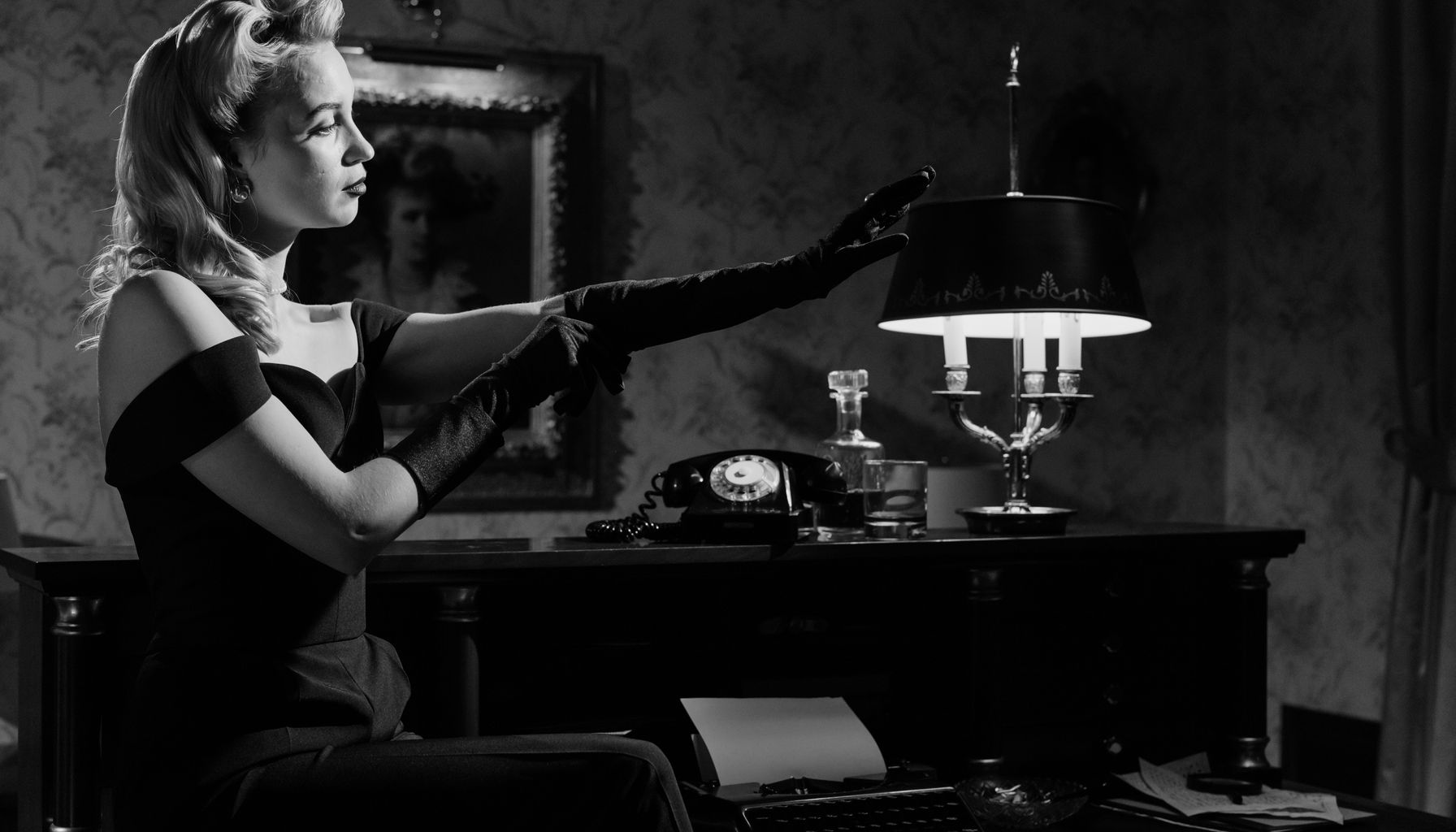
Few cinematographies have shaped world cinema language as much as Italian cinema. From Roberto Rossellini to Michelangelo Antonioni, Italian directors created styles, themes, and techniques that influence filmmakers today. This guide presents ten essential films for anyone who wants to know the history of Italian cinema and understand why it remains a mandatory reference.
Why Italian cinema is a worldwide reference
Italian cinema occupies a central place in the history of film. It was in post-war Italy that Neorealism was born, a movement that directly influenced the French Nouvelle Vague and filmmakers around the world, from Satyajit Ray to Martin Scorsese.
More than entertainment, classic Italian films function as historical and cultural documents. They record the devastation of World War II, economic reconstruction, social transformations of the 1960s and 1970s, and tensions between tradition and modernity that marked twentieth-century Italy.
For those interested in Italian culture more broadly, cinema is a privileged gateway — it connects literature, visual arts, music, and history in a single experience. Those who plan to live or study in Italy also find in these films constant references in daily life and local imagination, something relevant for those researching about life in Italy.

Neorealism: the origins of modern Italian cinema
Neorealism emerged from the rubble of Italy destroyed by war, between 1943 and the early 1950s. Directors filmed in the streets, often with non-professional actors, seeking to portray social reality without Hollywood studio artifices.
Roma, Città Aperta (Roberto Rossellini, 1945) is considered the founding landmark of the movement. Shot still under the effects of Nazi occupation in Rome, the film narrates the resistance of civilians and clergy against the regime, with documentary urgency that impressed the world shortly after its release.
Ladri di Biciclette (Vittorio De Sica, 1948) is perhaps the most well-known Neorealism film outside Italy. The simple story of a man who must recover his stolen bicycle to keep his job transforms into a moving portrait of poverty and human dignity in post-war Italy.
Completing this fundamental trilogy, Paisà (Roberto Rossellini, 1946) follows, in six episodes, Italy's liberation by the Allies, from Sicily to the North, showing the country's reconstruction from multiple and fragmented perspectives.
Federico Fellini: fantasy, memory, and social critique
After Neorealism, Federico Fellini led Italian cinema into more dreamlike and authorial territory, without entirely abandoning social critique.
La Dolce Vita (1960) portrays Rome's high society, between parties, decadence, and existential emptiness. The film gave rise to the term "paparazzo," inspired by one of the characters' names, and became synonymous with a certain decadent elegance associated with the Italian capital.
8½ (1963) is a metafilm about a filmmaker's own creative crisis, mixing reality, memory, and fantasy in a narrative structure that was revolutionary for its time. It is considered by many critics one of the most influential films ever made about the creative process.
Amarcord (1973) revisits, with humor and nostalgia, Fellini's childhood in the small town of Rimini, in the Romagna region, during the fascist period. The film balances tenderness and political critique in a unique way.
Luchino Visconti: aristocracy, decadence, and desire
Luchino Visconti brought to Italian cinema a literary and visual sensibility associated with the decadence of aristocratic classes.
Ossessione (1943), a free adaptation of the American novel "The Postman Always Rings Twice," is considered by many historians a precursor to Neorealism itself, even though it was made before the movement officially consolidated.
Senso (1954) narrates a forbidden romance during the Austrian occupation in northern Italy in the nineteenth century, combining historical melodrama with subtle criticism of the elites.
Il Gattopardo (1963), based on Giuseppe Tomasi di Lampedusa's novel, is a sumptuous portrait of Sicilian aristocracy's decadence during Italian unification. The production is recognized for its meticulous historical reconstruction and memorable performances.
Morte a Venezia (1971), based on Thomas Mann's novella, explores desire, beauty, and decadence in a melancholic Venice, accompanied by Gustav Mahler's soundtrack.
Michelangelo Antonioni and modern existential crisis
Michelangelo Antonioni is responsible for taking Italian cinema into more abstract and psychological territory, centered on people's inability to communicate.
L'Avventura (1960) caused controversy at its release by subverting narrative expectations: a woman disappears during a boat trip and is never found, while the film focuses on the void left by her absence among the remaining characters.
La Notte (1961) follows a Milanese couple over the course of one night, exposing the emotional exhaustion of a marriage in crisis, amid a cold and modern urban landscape.
Blow-Up (1966), Antonioni's first film shot in English, takes place in London and questions the boundary between reality and illusion through the story of a photographer who may have unwittingly captured a murder.
Other fundamental filmmakers in Italian cinema
Beyond the already consecrated great names, other directors expanded the themes and language of Italian cinema.
Pier Paolo Pasolini, with Accattone (1961), turned cameras toward Roman sub-proletariat, portraying marginalized characters with a rawness that broke with the aestheticism that had predominated until then.
Ermanno Olmi, in Il Posto (1961), narrates the routine of a young man who lands his first job at a large corporation in Milan, capturing with subtlety the alienation of modern bureaucratic work.
Marco Ferreri, with La Grande Abbuffata (1973), signs one of the most radical social critiques in Italian cinema: four friends gather to eat themselves to death, in an acerbic satire of consumerism and the emptiness of consumer society.
Where to begin: a route for newcomers
For those who have never watched a classic Italian film, the order of discovery can make all the difference in the experience.
- Start with Vittorio De Sica, whose accessible humanism in "Ladri di Biciclette" functions as an emotional gateway to Neorealism.
- Move to Federico Fellini, whose visual fantasy in "La Dolce Vita" and "8½" broadens aesthetic horizons without losing narrative power.
- Deepen with Michelangelo Antonioni, whose philosophical complexity demands more from the viewer, but rewards with lasting reflections on the human condition.
Today, many of these films are available on platforms like MUBI, specialized in auteur cinema, as well as YouTube Films channels and streaming services aimed at Italian audiences. It's also worth checking festivals and Italian cinema screenings that usually circulate in Brazil, frequently featured in the Italy News sections of Raízes Italianas.
For those planning experiences in Italy linked to cinematographic culture, cities like Rome, Venice, and Cinecittà in Rome offer thematic routes dedicated to Italian cinema history, from the studios where Fellini shot his great classics to the real locations portrayed in these films.
Knowing these ten classics is only the first step to understanding the richness of Italian cinema. Each director mentioned here built their own language, but all share the ability to transform Italy — its streets, its history, and its contradictions — into raw material for one of the most influential cinematographies of all time.