Mattarella Celebrates 80 Years of Alto Adige Autonomy
Italian President defends the autonomy model of Alto Adige/Südtirol on the 80th anniversary of the Paris Agreement, a landmark for minority protection in Italy.
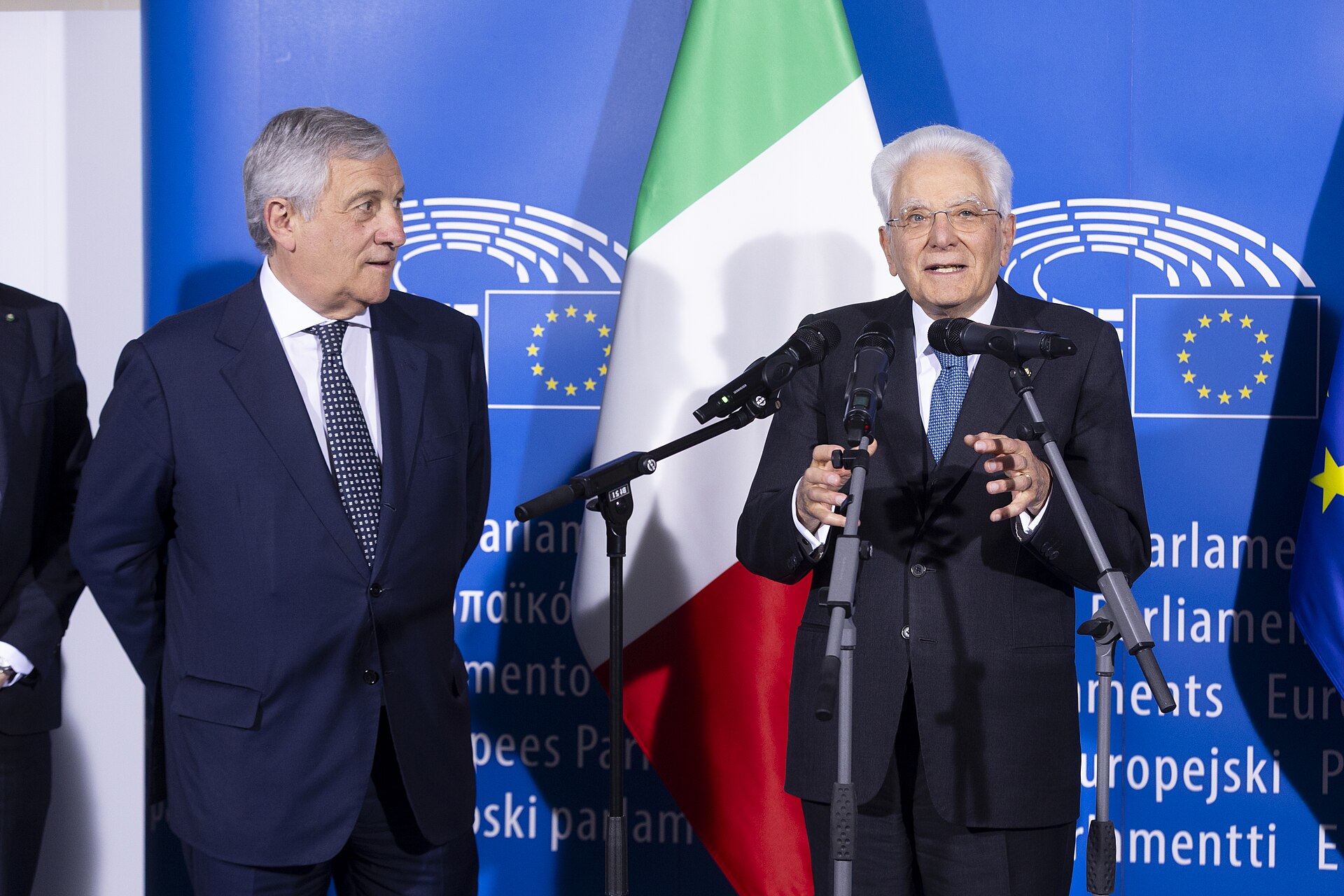
President of Italy, Sergio Mattarella, participated this week in Merano, in Alto Adige (Südtirol), in celebrations marking 80 years of the Paris Agreement, also known as the De Gasperi-Gruber Agreement, a historic milestone that established the autonomy regime for the region. During his speech, Mattarella stated that "one is not a foreigner in one's own home," a phrase that summarized his defense of the model of coexistence among Italians speaking Italian, German, and Ladin in that province, according to Comunità Italiana.
What Mattarella Said in Merano
The ceremony was attended by the president of Austria, Alexander Van der Bellen, which reinforced the bilateral nature of the agreement signed in 1946 between Italy and Austria. Mattarella linked Alto Adige's autonomy to Article 3 of the Italian Constitution, which addresses the equality of all citizens before the law, without distinction of language or origin, according to Comunità Italiana.
By stating that no one should feel like a foreigner in their own land, the Italian president sought to capture the spirit of the De Gasperi-Gruber Agreement: to ensure that the German-speaking population of Alto Adige—a majority in much of the province—could fully live their cultural and linguistic identity without giving up citizenship and integration into the Italian state. The joint presence of the Italian and Austrian heads of state at the ceremony was seen as a symbol of reconciliation between the two countries around an issue that, decades earlier, had generated diplomatic tensions and episodes of violence in the region.
The History Behind Alto Adige Autonomy
To understand the symbolic weight of this date, one must go back to the early 20th century. The territory now known as Alto Adige or Südtirol was part of the Austro-Hungarian Empire and only came under Italian control in 1919, as a result of the agreements that redrew European borders following World War I.

In the following decades, under the fascist regime of Benito Mussolini, the region was subjected to a forced Italianization policy, which included the prohibition of teaching in German, the alteration of place names and surnames, and incentives for migration of Italians from other regions to change the local demographic balance, according to Comunità Italiana's account of the historical context celebrated in Merano.
The De Gasperi-Gruber Agreement, signed in 1946 between then-Italian Prime Minister Alcide De Gasperi and Austrian Chancellor Karl Gruber, was the first formal step to reverse this situation, as it provided specific protections for the German-speaking population of the region. The agreement paved the way for the Statutes of Autonomy of 1948 and later 1972, which significantly expanded the province's legislative and administrative powers in relation to Rome.
The so-called "Alto Adige question" was formally closed only in 1992, when Austria and Italy notified the United Nations (UN) that they considered the dispute resolved, after decades of negotiations and adjustments to the autonomy model. Since then, Alto Adige has frequently been cited as one of the most successful examples of managing linguistic minorities within a unitary state in Europe.
Why This Matters to Descendants of Italians
For Brazilians studying their Italian roots, Alto Adige's autonomy offers an important lesson: Italy is not a homogeneous cultural bloc, and its national unity has coexisted, for decades, with strong regional identities, local languages, and special statutes of self-governance. Regions like Alto Adige, Trentino, Sicily, Sardinia, Valle d'Aosta, and Friuli-Venezia Giulia have differentiated autonomy in relation to the rest of the country, reflecting their own histories, languages, and trajectories.
This type of understanding is especially useful for those researching their family's origins and seeking to contextualize civil records, Germanicized or Italianized surnames, and border changes that directly affected documentation of ancestors who emigrated from Alto Adige or frontier regions. Those in the process of searching for certificates in Italy and finding documents from regions like this should take this historical context into account, as names and spellings may have varied depending on the period—before or after fascist Italianization, for example.
The topic also relates directly to those following Italian Citizenship and News from Italy, as it shows how the country deals, in practice, with questions of identity, belonging, and citizenship within its own borders—a debate that echoes, in due proportion, in current discussions about who has the right to be recognized as Italian. For those thinking of moving to Italy or already living there, understanding regional particularities is also relevant for those following content on Life in Italy, since the experience of living in Alto Adige, with its official bilingualism and strong identity, is quite different from that experienced in other regions of the country.
The celebration of the 80th anniversary of the De Gasperi-Gruber Agreement, with the joint presence of the presidents of Italy and Austria, reinforces that Alto Adige's autonomy continues to be treated as a case of institutional success, more than three decades after the issue was officially closed before the UN. For descendants of Italians, the episode is a reminder that "Italianness" is plural and was built, in many regions, through negotiation between different identities within the same state.
Those seeking guidance on how these regional nuances might impact Italian citizenship recognition processes can rely on support from specialized Italian citizenship consulting, which routinely handles documents from different regions and historical periods of Italy.
Source: Comunità Italiana