
Discovery of 'phoenix planet' formed from a star's ashes
Researchers at the University of Warwick identify a second-generation planet around white dwarf HS 0209+0832; heavy elements suggest origin in stellar ashes.
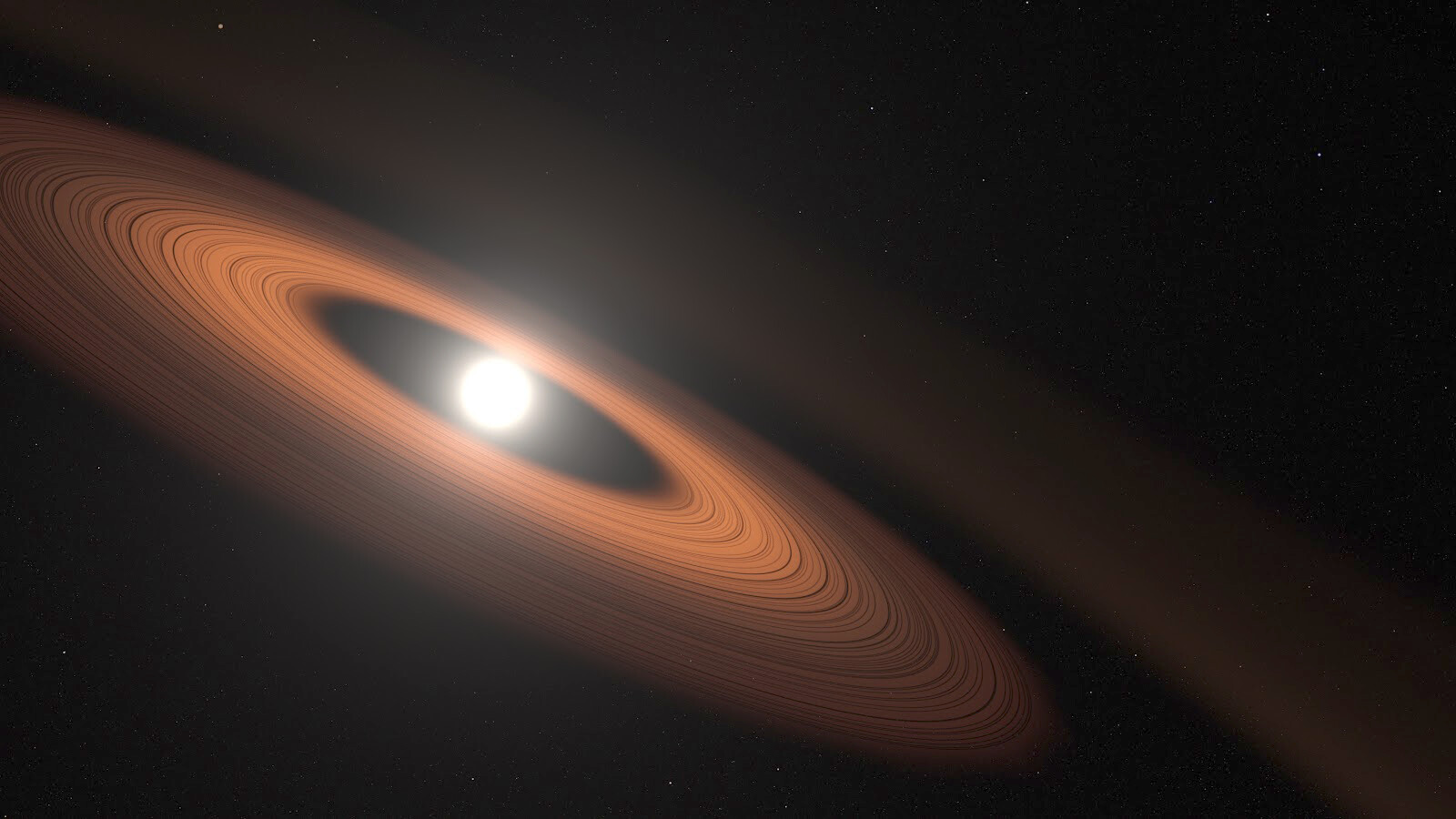
Discovery of 'phoenix planet' formed from a star's ashes
CATEGORY: science / astronomy
CONTENT (Markdown): Researchers led by the University of Warwick announced the discovery of a "phoenix planet" — a second-generation planetary body formed from the "ashes" of a star — observing chemical signatures in the atmosphere of the white dwarf HS 0209+0832, according to ANSA. The study, coordinated by Boris Gänsicke, was published in Nature Astronomy in 2026.
Discovery and publication — phoenix planet and University of Warwick
The research was conducted by an international team under the coordination of Boris Gänsicke (University of Warwick) and described in a 2026 article in Nature Astronomy, according to ANSA. The term phoenix planet refers here to a body that formed after the death of the progenitor star, from remnant material rich in heavy elements.
- The focus of the observation is the white dwarf HS 0209+0832, a compact object representing the remnant core of a star that exhausted its fuel.
- The publication details spectra obtained with instruments sensitive enough to identify traces of heavy elements in the white dwarf's atmosphere — evidence that it is accreting external material.
Observational evidence — white dwarf HS 0209+0832 and heavy elements
Researchers detected in the atmosphere of HS 0209+0832 heavy elements such as zinc, copper and niobium. These elements are produced in nucleosynthesis processes that occur at the end of a star’s life, during explosive or late evolutionary phases, and not under typical conditions of primary protoplanetary disks.

- The presence of these materials on the white dwarf's surface was inferred via high-resolution spectroscopic analysis, revealing absorption lines characteristic of these atoms.
- According to the interpretation of the group led by Gänsicke, the relative abundances indicate that the material comes from a massive remnant planetary body — possibly a gas giant or its core — that would have been disrupted and is now being accreted by the white dwarf.
- This chemical pattern is consistent with the idea of reaccreting material around a dead star: stellar remnants and materials enriched by stellar evolution can cluster and re-form second-generation planets.
ANSA notes that the authors combine observational data with theoretical models to rule out other possible sources of the elements, such as interstellar contamination or atmospheric processes specific to the white dwarf.
Implications and questions — the future of planetary systems
The discovery has significant implications for exoplanet astrophysics and our understanding of the fate of planetary systems after the death of their host stars.
- If confirmed, the phoenix planet would show that second-generation planets can indeed form — or reform — from enriched remnants of ordinary stars, including phases like red giant and white dwarf.
- This broadens the scope of environments considered possible for planet formation beyond primordial protoplanetary disks tied to stellar birth.
- The observation also raises questions about the fate of the Solar System: authors and commentators discuss whether, far in the future, the Sun's ashes could fuel the formation of new bodies after its demise. However, this is speculative extrapolation that depends on many dynamic and temporal factors.
The discovery may also inspire public discussions about science, technology and culture, but it does not imply direct legal effects in areas such as citizenship or administrative rights. Updates about the research and its scientific developments will be published in Italy News when relevant to readers.
Limitations and next steps
The study authors highlight limitations: interpretation depends on the robustness of chemical and dynamical models linking the observed abundances to the process of planetary formation or destruction. Required:
- New spectra with greater sensitivity across different wavelength ranges.
- Observations of analogous systems to verify whether the heavy-element pattern is recurring.
- Refined theoretical modeling on how enriched stellar remnants can coagulate and form bodies gravitationally bound to the white dwarf.
The scientific community views the case as a starting point: confirming other candidates with similar chemical signatures will strengthen the second-generation planet hypothesis.
Scientific context and further reading
The discovery sits within a growing field examining the interaction between compact stars and surrounding material. For readers interested in following developments related to the research and broader impacts, the portal publishes updates in Italy News.
Conclusion: the Warwick team’s report on HS 0209+0832 provides the clearest evidence yet that material enriched by stellar death can recombine into a planetary body — a true phoenix planet — spurring new lines of inquiry about the life and rebirth of planetary systems.
Source: ANSA