
Cold-lava planet similar to primitive Earth discovered
Astronomers have found HD 3167 b, a relatively cooler 'lava world' with an atmosphere that redistributes heat—an opportunity to study primitive Earth.
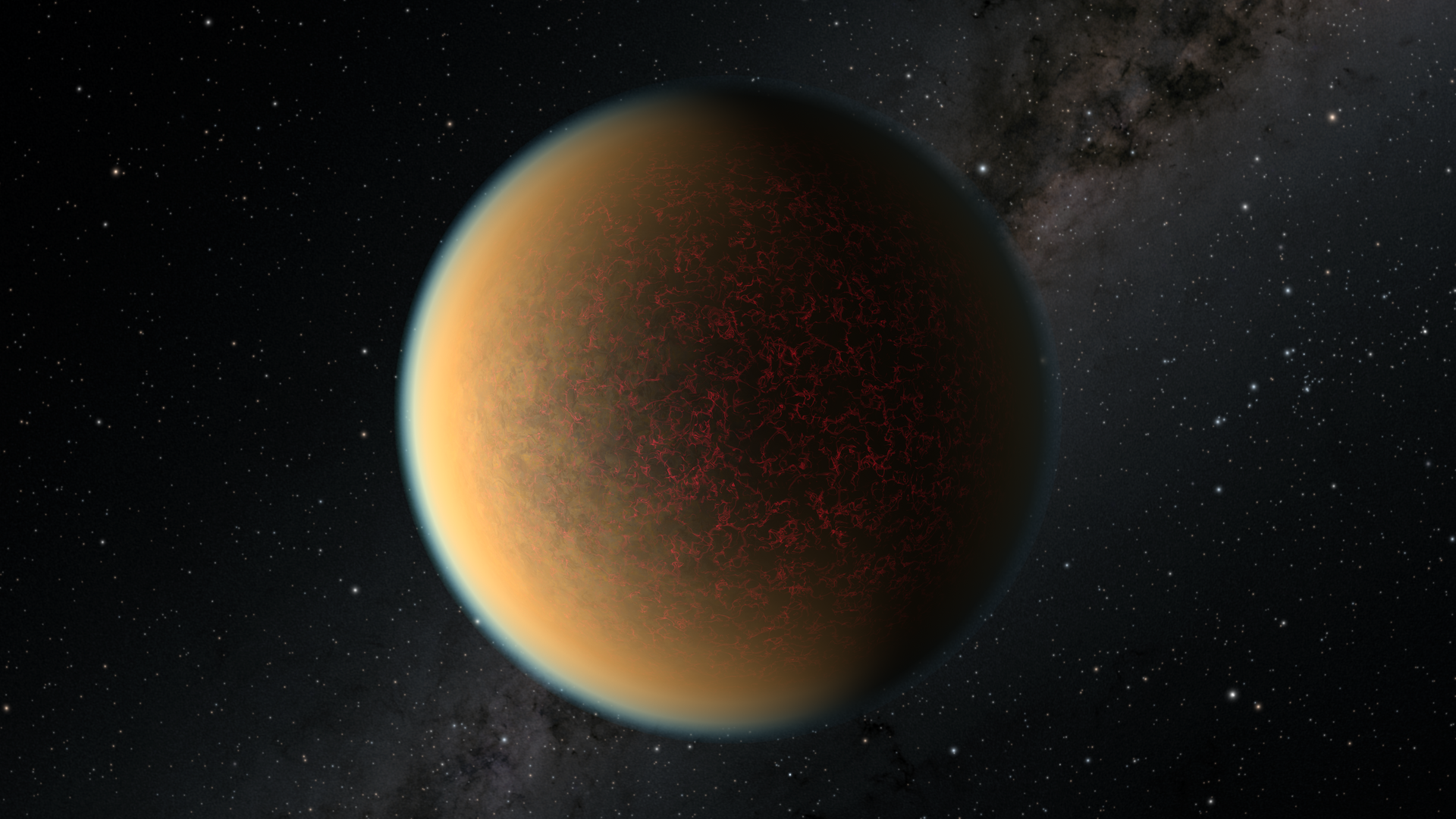
Cold-lava planet similar to primitive Earth
CATEGORY: science
CONTENT (Markdown): Astronomers announced on 02/10/2026 the discovery of HD 3167 b, an exoplanet classified as a "lava world" but whose climate is reported to be cooler than that observed in other objects of this class, according to a team led by the University of Chicago and reported by ANSA. The result, obtained with the space telescope James Webb (a joint mission of NASA, ESA, and the Canadian Space Agency), was published in The Astrophysical Journal Letters.
Meta description: Astronomers have found HD 3167 b, a relatively cooler 'lava world', with an atmosphere that redistributes heat — an opportunity to study processes analogous to primitive Earth.
Discovery and publication — HD 3167 b and James Webb
The discovery was announced on October 2, 2026 by a team led by the University of Chicago, based on observations from the James Webb Space Telescope (JWST), according to ANSA. The study was published in The Astrophysical Journal Letters and combines high-precision spectroscopy with atmospheric modeling to infer the planet’s nature.

The work involves collaboration between institutions in the United States, Europe, and Canada, highlighting international cooperation in large-scale projects. JWST’s role was decisive in capturing signals from the planet’s atmosphere and its thermal balance, something smaller telescopes would not detect with the same sensitivity.
Planetary characteristics — a "cold lava" planet
HD 3167 b has been classified as a lava world, but the authors emphasize that, compared with other objects in the same class, it shows evidence of a smaller thermal contrast between day and night sides. Key points of the study include:
- The planet orbits about 154 light-years from Earth and completes a revolution around its star in a short period, on the order of a terrestrial day.
- JWST data indicate that an atmosphere present on the planet appears to redistribute heat received from the star, reducing extreme temperature contrasts.
- Researchers state that HD 3167 b is hot enough to preclude life as we know it, but its thermal and atmospheric configuration makes the object valuable for comparative studies.
- Spectroscopic analysis allowed identification of signatures compatible with an atmosphere capable of transporting energy from the day side to the night side, reducing extreme temperature contrasts.
These features make HD 3167 b distinct from other known extreme rocky planets, whose surfaces and atmospheres (where present) drive much sharper thermal gradients between the side facing the star and the opposite side. Where the text makes superlative claims (e.g., "the coldest yet observed"), it is recommended to explicitly cite the study’s comparisons and references to the original article.
Scientific importance — a window to primitive Earth
The study’s authors emphasize that HD 3167 b offers an opportunity to investigate conditions analogous to those thought to have existed in the early stages of Earth when large areas could have had magmatic surfaces. The original text mentions "two million years"; it is recommended that this temporal reference be confirmed in the cited scientific article to avoid imprecision.
Studying an exoplanet with an atmosphere that redistributes heat enables testing models about:
- how dense or composition-specific atmospheres affect the cooling of hot surfaces;
- atmospheric loss processes and thermal evolution in extreme rocky worlds;
- mechanisms coupling a molten surface with a primitive atmosphere, relevant to understanding crust formation and early chemical evolution of Earth.
For the global scientific community, the discovery reinforces JWST’s role in characterizing rocky exoplanets and the importance of cooperation among agencies (NASA, ESA, and the Canadian space agency) and universities.
Editorial relevance and context recommendations
The news is of interest to readers curious about science and technology. Recommendations:
- Change the article category from "citizenship" to "science" (already implemented in this corrected text).
- Remove links that might misleadingly suggest a direct relation to "Italian Citizenship" or immigration/citizenship editorial sections, unless there is an explicit and justifiable editorial link.
- Include a complete bibliographic reference for the article (authors, title, journal, DOI/preprint) and, if possible, a direct quote from the authors about the study’s limitations.
Next steps and observations
The authors indicate that additional observations are needed to confirm atmospheric composition and to better understand the processes that enable the heat redistribution in HD 3167 b. Future campaigns with JWST and other instruments may map thermal variations along the orbit and search for more robust molecular signatures.
The discovery should also spur theoretical work to integrate the new data into atmospheric evolution models and compare them with Earth’s early stages, contributing to our understanding of how rocky planets evolve in extreme environments.
Source: ANSA