Giotto's Frescoes of Saint Francis Shine in Florence
Four-year restoration reveals Giotto's frescoes in the Basilica of Santa Croce, Florence, coinciding with the centenary of Saint Francis's death.
Giotto's Frescoes of Saint Francis Shine in Florence
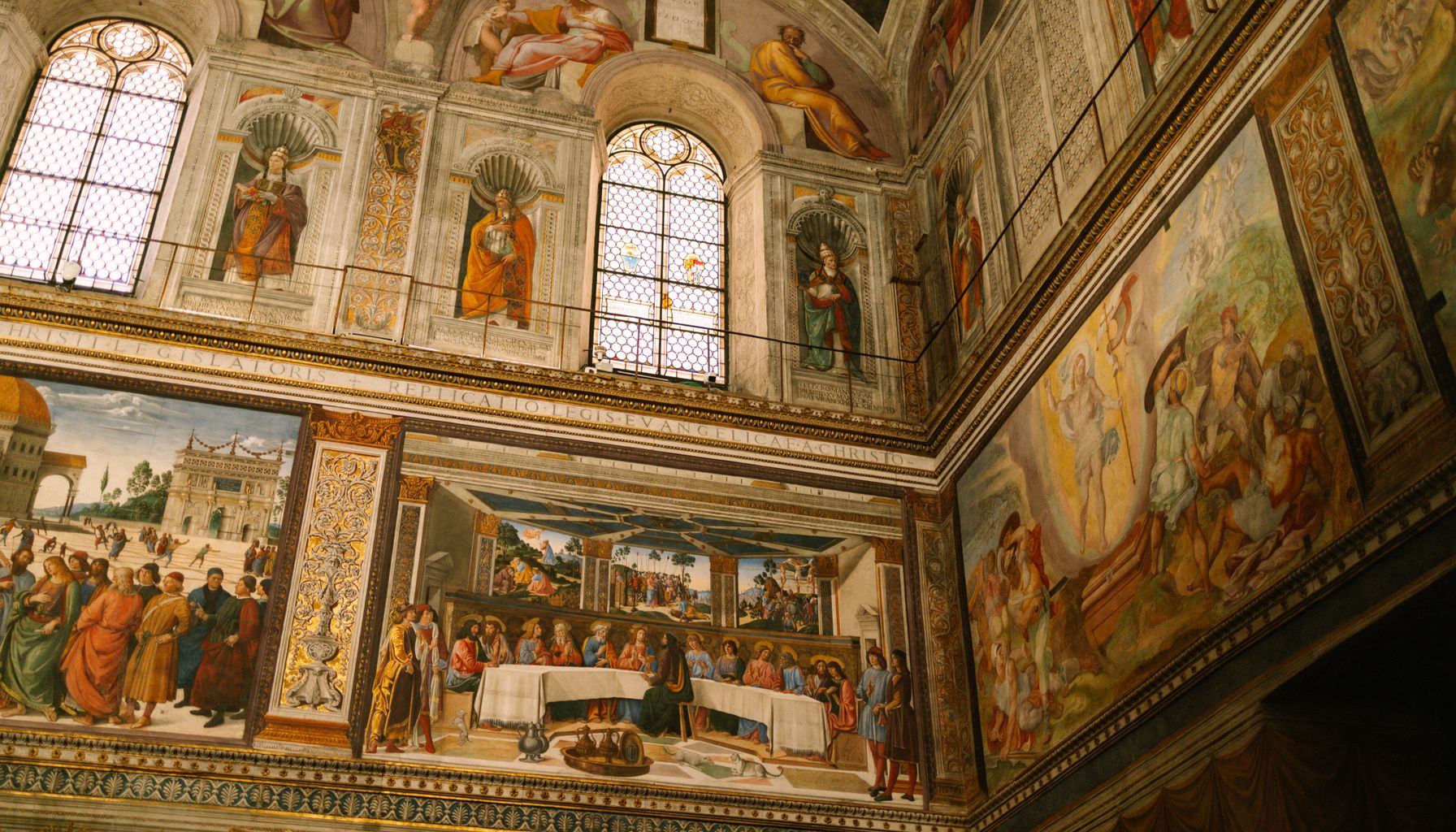
The frescoes by Giotto in the Cappella Bardi, in the Basilica of Santa Croce in Florence, have returned to public view after four years of restoration. According to ANSA, the recovery work on the murals that compose the Storie di San Francesco revealed details previously obscured by centuries of dirt accumulation and prior interventions, restoring greater clarity to the brushstrokes and expressive intensity of the scenes dedicated to the life of Saint Francis of Assisi.
The Restoration Completed After Four Years of Work
The intervention in the Cappella Bardi, one of the most visited spaces in the Basilica of Santa Croce, took four years to complete. According to ANSA, the restoration team worked on cleaning and consolidating the original pictorial layers of Giotto, recovering tones and contours that had lost definition over time.
The result, according to the report, is a clearer reading of the scenes that narrate episodes from the life of the saint of Assisi, highlighting the depth of the gestures and expressions of the portrayed characters — characteristics that made Giotto's work a landmark in the history of Western painting. The Basilica of Santa Croce, one of Florence's most important temples, also houses the tombs of figures such as Michelangelo and Galileo Galilei, which reinforces the symbolic weight of the space where the Cappella Bardi is located.
The Historical and Artistic Importance of the Storie di San Francesco
The Storie di San Francesco, a cycle of frescoes painted by Giotto, are considered one of the masterpieces of the Italian Trecento and a point of reference for later generations of artists. ANSA highlights that the restoration enabled detailed technical studies on the execution of the paintings, making it possible to identify differences in brushwork between Giotto himself and members of his workshop.
These analyses confirm the collective nature of artistic production in that era, when masters like Giotto worked with teams of collaborators to handle large-scale commissions, such as frescoes for entire chapels. Still, according to the report, the sections attributed directly to Giotto's hand maintain a level of refinement that distinguishes them from the rest of the composition, reinforcing his central role in the renewal of Italian pictorial language in the early fourteenth century.
The collection of Italian sacred art remains one of the main reasons that attract visitors and scholars to the country, and cases like this are part of the subjects that Raízes Italianas follows in Italy News.
A Restoration That Coincides with the Franciscan Centenary
The completion of work in the Cappella Bardi occurs at a symbolic moment: 2026 marks 800 years since the death of Saint Francis of Assisi, one of the most revered religious figures in Italian and world history. According to ANSA, the coincidence between the reopening of the restored frescoes and the Franciscan centenary gives the Basilica of Santa Croce a prominent role in the celebrations that should take place throughout the year in Italy.
For Brazilians descended from Italians, episodes like this help understand the weight of the cultural and religious heritage left by Italy over the centuries. The Basilica of Santa Croce, with its chapels decorated by masters like Giotto, is part of a heritage that remains alive and accessible to those who visit or research the country. Those who follow Italian daily life and customs also find in religious spaces a portrait of how faith and art intertwine in Life in Italy.
The Basilica remains open to public visitation, allowing tourists and scholars to observe up close the result of the restoration in the Cappella Bardi — work that, according to ANSA, reaffirms Giotto's relevance as one of the great names in Italian painting and in the history of Western art itself.
Source: ANSA